Debts Disappear.
Court Cases Dropped.
Want to Know Why?!…
Do You Know the Difference of a Legal NAME vs Given Names? .
Know Why It Matters.
Put Your Correction on the Record.
If you have ever felt that taxation, debt, licensing, legal obligation, or the identity used throughout those systems was never fully explained to you, begin with something you can examine for yourself: the record of your birth, the date you were born, and the separate date that record was filed or registered.
Discovering the distinction is only the beginning. Understand what it touches, document your position, preserve what happens next, and build a record that can serve you, your family, other living people, and those who come after us.
Date Co-Mingling
& the Reclamation of Your Divine Identity
PEOPLE’S
GUIDE
It sounds administrative. It sounds like a filing technicality. Nobody looks at a bureaucratic label and thinks that label is the boundary line between freedom and commercial slavery, once you see the file registration date you will see how it is hidden in plain site.
More than a decade of research brought into one place.
This project brings together 10+ years of research, source documents, notices, institutional responses, correction experiences, templates, and real-life application so people do not have to begin at the beginning every time.
Research and practical experience organized into a path that can be followed.
Begin with the documents, dates, filings, responses, and records you can examine for yourself.
Preserve what institutions actually corrected, answered, acknowledged, refused, or returned.
The education, templates, recordings, evidence, and Public Gazette continue growing around active members.
One place to learn, research, document, publish, and keep moving.
The members area brings the education and tools together so the next step is clear — whether you are studying the framework, looking for a template, reviewing a recording, or building a Public Recording.

Member Portal Dashboard
A welcoming home base that keeps the library, templates, recordings, community, and new releases within easy reach.

Core Library
Guides, research files, educational series, checklists, and supporting resources organized for practical use.

Public Recording Studio
Document the event, attach supporting material, publish the record, and receive a direct shareable link immediately.

Live Classroom & Community
Learn through 2–3 live educational podcasts each week during prelaunch, then return to the recordings inside the growing Educational Series.
What if the most important question is not “What is your name?”
but “Who or what does that name identify?”
A living being can be born. A record can be filed. Those are two different events — and the distinction changes the questions you know to ask.
Understand the legal name fraud and the reclamation of your divine identity.
See the court record behind the statement: “A Passport can be acquired without a LEGAL NAME/Birth Certificate or Social Security Number required.” Read Abigail Carmichael Jordan v. Marco Rubio for yourself.
Read Abigail Carmichael Jordan v. Marco RubioThis is not only about a name on a piece of paper.
The identity carried through official records reaches far beyond a birth certificate. It follows into taxation, licensing, courts, debt and credit, financial identity, property, inheritance, and other systems that can affect everyday life. Understanding the distinction changes the questions you know to ask.
Who is being identified?
Separate the living man or woman from the legal organization name used in administrative records and stop allowing the two to pass unquestioned as one.
What is being attached?
Follow the legal organization name into earnings, taxation, financial obligations, and the products of your labor. See where the record travels and what is attached to it.
What assumptions travel with the record?
Compare the source record with the identity information later used in licensing, identification, and other administrative systems.
What name appears on the matter?
Observe the legal organization name, dates, identifiers, and presumptions appearing in dockets, notices, orders, and databases.
How is the identity carried commercially?
Trace name and date information through credit, financial reporting, banking, and identity-verification systems.
What follows the record through life?
Study how the identity used in records appears in property, estate, inheritance, and related administrative processes.
The record is simply accepted as it is.
You can begin building a record of your own.
Two dates. Two separate events.
Open the birth record and look directly at the two events: the biological date of birth and the later date filed or file-registration date. Start with what is already on the face of the record.
Date of Birth
The day the living man or woman was born — before the later administrative filing of the record.
- A biological event
- The living man or woman already exists
- Shown directly on the source record
Date Filed / File Registration Date
The separate administrative event when the birth record is later filed or registered by the state authority.
- A distinct recorded event
- Occurs after the biological event
- Central to separating the living being from the legal organization record
The distinction becomes more useful when the record shows what happened next.
Member evidence includes documented correction experiences, institutional responses, court records, and other records that can be examined rather than simply repeated as a claim. The full evidence section appears below.
The breath came first.
The filed record came after.
Two dates on one certificate force a question most people were never taught to ask: which date belongs to the living being — and which belongs to the later administrative filing?
Define the capacity before accepting the presumption.
This is where the separation becomes powerful. When a police officer, prosecutor, court, mayor, clerk, attorney, licensing body, or other administrative actor relies on a legal organization name and an attached date, put the separation on the record and require the actor to identify exactly who or what is being addressed, in what capacity, and upon what record and authority.
“Are you looking for a legal name?”
If the answer is yes, the next question becomes: which date does the record assign to that legal name — the biological date, or the later file-registration date?
Can the record identify the party it is actually proceeding against?
Can any representative identify, on the record, which date belongs to the named legal organization and which belongs to the living man or woman — and what record supports treating the two as one?
Who are you looking for?
If the officer is searching a database for a legal name, what record connects that organization to the living being standing before the officer?
Who is the party being proceeded against?
What name, date, record, and capacity are relied upon when a prosecutor attributes an obligation or allegation to the living being?
What entity is on the docket?
What record identifies the named party, and what is the basis for treating the living being and the legal organization as one and the same?
What authority is being exercised?
When a public office acts through an administrative record, what is the authority for carrying the organization’s record onto the living being?
What capacity is being represented?
Require clarity about whether counsel is addressing the living being, the legal organization, or a presumed capacity connecting the two.
Which date belongs to which event?
Where an agency holds both a biological date and a later filing date, require an explanation for attaching the biological event to the legal organization in later records.
Put the separation into the notice itself.
Margaret Sue Bozgoz put the separation in writing. Her notice states her biological date separately from the later file-registration date for MARGARET SUE BOZGOZ, identifies the distinction as material, and declares that the distinction will be asserted in future proceedings.
Her record also includes Minnesota Secretary of State assumed-name filing material. The separation is no longer left as an idea: it becomes a written record that can be produced, served, referenced, preserved, and carried forward into later interactions.
If the living being is the beneficial holder,
why are only the obligations visible?
Where is the benefit? Where is the accounting? Who is administering the relationship — and in what capacity?
If there is a beneficiary, where is the benefit?
If the living being is described or treated as the beneficiary or beneficial owner, do not look only at the obligations. Demand the other side of the relationship: the benefit, the disclosure, the accounting, the duties of administration, and the answer to who actually receives the economic gain.
What property, right, credit, protection, account, service, or other benefit is actually administered for the beneficiary?
If another party controls or administers the legal organization, what duties of disclosure, loyalty, accounting, or care are said to follow?
If the organization carries obligations, liabilities, assets, or benefits, where is the complete record showing both sides rather than only the obligations?
Follow the benefit itself. Does the living being receive the benefit associated with the structure, or does the economic advantage flow elsewhere?
Don’t just say it.
Document it. Correct it. Put it on the record.
A position becomes stronger when it is tied to source documents, dates, institutional responses, service, and a chronology that can be examined later.
See what members are documenting.
Real people. Real records. Our members are documenting corrections across credit files, court records, government agencies, and more. Explore their experiences, evidence, and breakthroughs — and see what’s possible when you know what to look for.
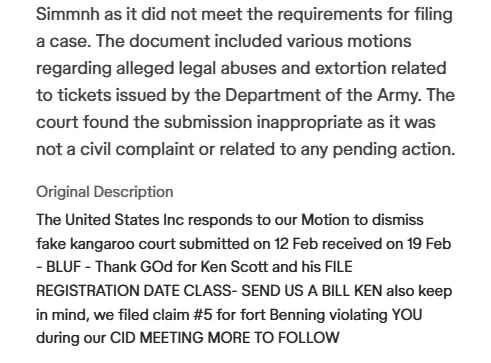
Court Confirms Improper Filing
“The court ordered the return of a document… The submission was not a civil complaint or related to any pending action.”
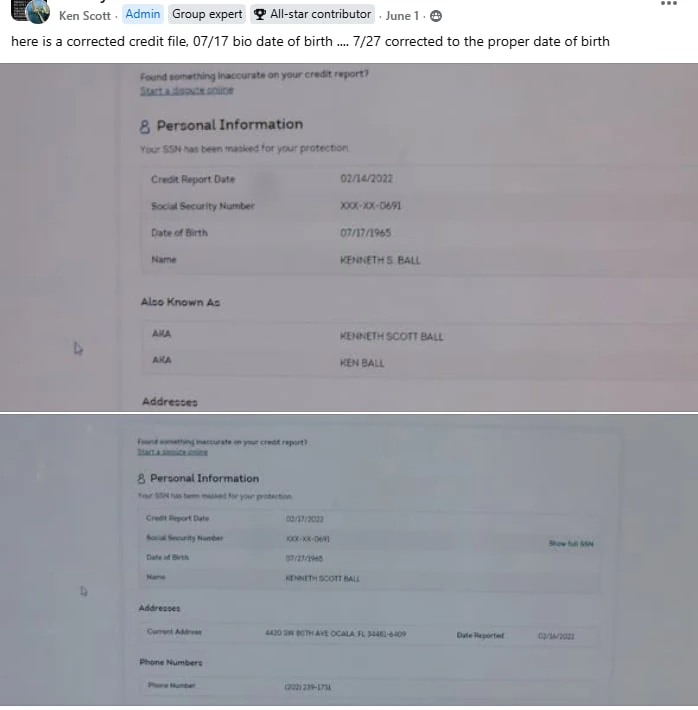
Corrected Date of Birth
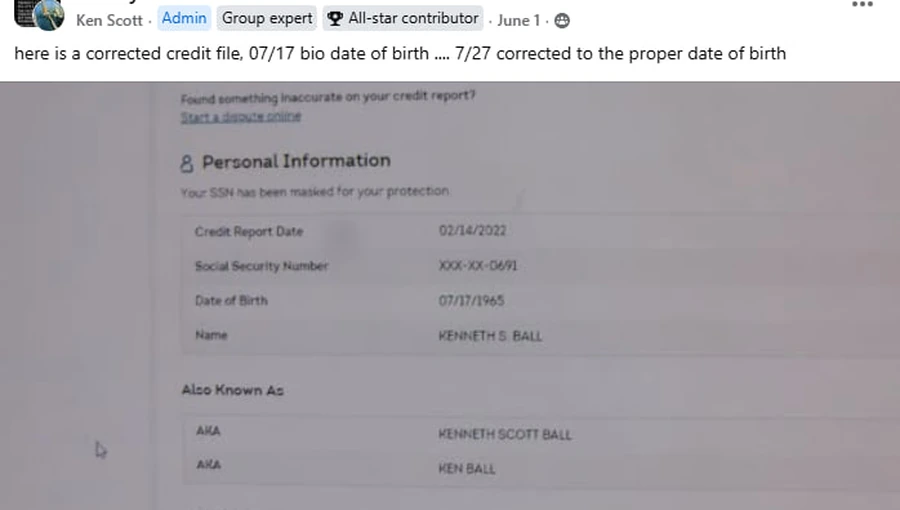
“Here is a corrected credit file, 07/17 bio date of birth … 7/27 corrected to the proper date of birth.”
Real People. Real Impact.
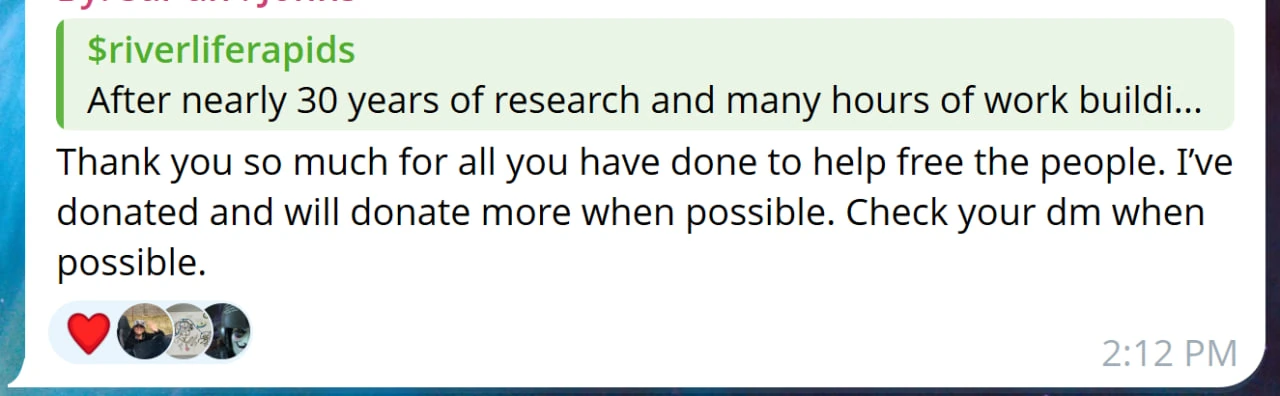
“Thank you so much for all you have done to help free the people. I’ve donated and will donate more when possible.”
For people who want to know the WHY — then do the work of documenting what they find.
The membership is built for men and women who want knowledge they can examine, tools they can adapt, records they can preserve, and a community where deeper questions can continue.
Compare the framework with your own source records and supporting documents.
Go beyond the surface and learn why the dates, names, capacities, benefits, and records matter.
Preserve notices, corrections, responses, acknowledgments, refusals, and the chronology that follows.
Use the live classroom, member research, new releases, and Public Gazette to keep building your knowledge and record.
Start with the People’s Complete Guide.
Understand the two-date framework, the legal organization name, the documented correction experiences, how to build your evidence, and how to move from private discovery into notice and public record.
Turn discovery into a record that can be followed.
Move from learning to documentation, from documentation to action, and from individual action to a growing public body of recorded experience.
Understand
See the distinction between the two recorded events and understand why it changes the questions you can ask.
Document
Gather the source record and preserve the names, dates, identifiers, correspondence, and evidence relevant to your experience.
Correct
Use the supporting documents and templates to organize correction requests and preserve every result.
Serve Notice
Build a clear notice trail and keep the evidence showing what was sent, received, acknowledged, answered, or left unanswered.
Preserve
Keep the chronology together so your position is supported by records rather than memory alone.
Publish
When community access is active, add your documented record of events to the Public Gazette and help expand the collective record.
What you know privately is one thing.
What you can point to on the record is another.
Preserve what you said, what you served, what was answered, what was corrected, what was refused, and what happened next.
They Have Used Public Notice for Centuries.
Now Establish Yours.
Governments, trustees, registries, creditors and public authorities have repeatedly used the same basic architecture: move a matter out of a private file, publish it where it can be found, fix the date, give interested parties an opportunity to respond, and preserve what happens next.
A private file records what you know.
A public record establishes what was placed before the world.
Publication creates facts about the record itself: that a particular version existed, when it was published, where it could be inspected, what notice was given, what response period was offered, and what response or rebuttal was recorded afterward.
Publish
Move the notice or document out of private possession and into a stable public location with an identifiable version.
Create the reference point →Give Notice
Identify the people, offices, organizations or interested parties to whom the record is directed and preserve service evidence where used.
Fix who was told →Open the Record to Rebuttal
State a clear opportunity and method to correct, dispute, explain or rebut the published record instead of leaving the matter open-ended.
Make response measurable →Preserve What Happened
Keep the original publication, later versions, responses, acknowledgments, refusals, corrections and status after the response period.
Build the chronology →Publication starts clocks, calls forward claims and makes the opportunity to object part of the record.
The exact period and consequence differ by subject and jurisdiction. But the architecture repeats so often that its purpose is impossible to miss.
Publication can fix the legal notice date.
Under Canada’s Expropriation Act, notice is deemed given on Canada Gazette publication and an objector then has 30 days to object. If no objection is filed, the statutory process can move forward.
Thirty-day creditor windows are real.
British Columbia estate law and New Zealand trust law use minimum 30-day notice periods before distribution rules operate on the claims then known to the representative or trustee.
The internet itself can be the publication medium.
U.S. federal civil-forfeiture rules allow an official internet notice to run for at least 30 consecutive days. Federal Register law also expressly recognizes publication, notice and rebuttable presumptions in defined circumstances.
The practice reaches back centuries.
The UK Gazette has been the official public record since 1665. Trustee legislation uses Gazette and newspaper advertisements to call forward claims before later distribution.
An unrebutted public record is still an unrebutted public record.
Silence does not magically turn every allegation into a court judgment. But if a notice is publicly published, dated, served where appropriate, and left open for a stated opportunity to rebut, the chronology can establish something independently checkable: what was published, when it was published, who was placed on notice, how long the record remained open to response, whether a rebuttal was entered into that record, and what happened next. Where governing law attaches a consequence to the deadline, that law acts upon the recorded timeline.
SERVICE: Recorded method / reference
OPPORTUNITY TO REBUT UNTIL: October 7, 2026
STATUS AFTER DEADLINE: No rebuttal is recorded in this Public Gazette entry as of October 7, 2026.
Understand the Power Behind the Record.
Members Gain Access to the Complete Educational Public Record eBook — from centuries of Gazette notice to modern digital public records, objection periods, unrebutted notices, electronic evidence, record integrity, and the principles that make a public record so powerful.
Your Public Gazette.
They publish their record. Why would you leave yours private? Active community members can establish a dated, public-facing chronology of their own notices, documents, service events, responses and later developments — with a direct address that can be found and referenced again.
Notice Placed on the Public Record
Preserve the first-publication date, permanent URL, source material and exact version.
Service & Interested Parties Recorded
Record who the notice concerns and the method/date/reference of direct service where used.
Opportunity to Rebut
Make the response deadline visible and record whether a correction, rebuttal or other response is entered.
Version & Record Certificate
Preserve the chronology with version history, cryptographic fingerprint and a print-ready record certificate.
Understand it for yourself.
Document it for your family.
Preserve it for posterity.
Make hard-won knowledge, documented experience, and the records behind it available so the next living man or woman does not have to begin where the last one began.
Get in at $199 before public launch moves to $399.
Founding Members save $200, enter the first live educational group, and receive each new member-area release as it comes online.
50% off now. 50% off monthly for life.
This is the part of prelaunch that cannot be recreated after public launch. Founding Members lock in the lower entry contribution and the lower continuing rate.
Don’t Wait for the Library to Be Finished.
Be Inside While It Is Being Built.
Founding Members enter the private members portal now and receive access to everything already available — then gain each new lesson, template, supporting document, podcast, Public Gazette feature, and member-area release as it is added.
Five advantages that disappear once the first group becomes history.
Founding Members will always be recognized as the first private member group to enter, learn live, and experience the system as it comes online — with lifetime core access and the locked $5/month Founding rate after the included period.
You won’t just receive the finished education. You’ll be there while it is being created.
Public-launch members can receive the completed recordings and library. Founding Members get the one experience that cannot be recreated later: being part of the first live educational group as the material is taught, discussed, recorded, improved, and added to the members area.
Be there before it becomes a recording.
Join 2–3 live educational podcasts each week and follow the knowledge while it is being presented and expanded.
Hear the questions as they are being asked.
Experience the discussion, questions, new discoveries, and real-life member experiences that shape each live session.
Watch the members area grow around you.
Receive new lessons, templates, recordings, research documents, and member features as they are released.
Live today. Organized for review tomorrow.
Live podcast recordings become part of the members-area Educational Series so you can revisit the knowledge whenever you choose.
There will only ever be one first group.
Enter with the first members building the private community, sharing documented experiences, and following new developments together.
Enter for $200 less than public launch.
Your prelaunch contribution is $199. The planned public-launch contribution for the Complete System is $399.
You are not joining a promise. You are joining something useful now that keeps growing.
Prelaunch means immediate access to what is already available, plus each new release as it is completed and added.
Available immediately
- Private members-portal access
- Everything already released in the core system
- 25+ ready-to-adapt templates as we add them
- Current research, evidence, examples, and supporting documents
- Private Telegram Founding Member access
- 2–3 live educational podcasts each week during prelaunch
- Lifetime access to the complete core system
Expanding while you are inside
- New lessons and Educational Series recordings
- New and improved templates
- Additional research and supporting documents
- Public Gazette capability as it expands
- New member-area features and releases
- More documented experiences and evidence
- Your $5 Founding rate does not increase with public pricing
Enter now. Then watch the members area expand around you.
Prelaunch access means you begin with what is already available and continue receiving each new educational release as it is completed and added.
Live Educational Podcast Series
2–3 live sessions each week during prelaunch inside the private Telegram classroom.
Members Portal & Recorded Education
Live sessions are recorded and organized into the growing Educational Series for review.
Templates & Notices
Use the existing template library and receive new and improved additions as they are released.
Research Library
Gain deeper supporting documents, examples, notices, and research as new material is added.
Public Gazette
Gain publishing access as the Gazette feature comes online for active community members.
New Member-Area Releases
Receive new educational content and member features as each item is completed and launched.
Immediate access. Then the system keeps opening around you.
Get immediate access to the private members portal.
Enter the private Telegram group and see the next live educational session.
Participate in 2–3 live educational podcasts each week during prelaunch.
Replay the recorded sessions as they become part of the Educational Series.
Receive new templates, research, documents, Gazette features, and member-area releases as they are added.
The Complete Research, Record & Community System — as it comes online.
Your Founding Access is not limited to what is finished today. Enter the complete system now, use what is already available, and receive each new educational release, template, document, recording, community feature, and Public Gazette capability as it is added to the members area.
The record keeps growing.
Your first 3 months of continuing community access are included with Founding Access. After that included period, your continuing community access is locked at $5/month for life as a Founding Member — 50% below the regular $10/month rate — while the complete core system remains part of your lifetime access.
Included while community access is active
Community participation, ongoing podcasts, new research updates, new and improved templates, new additions, and Public Gazette publishing.
Your Founding rate stays yours
Your first 3 months are included. After that, Founding Members continue at a locked $5/month for life — half the regular $10/month rate — unless you cancel before the first monthly contribution or at any time afterward.
We make it easy to join the community join today! No Wo/Man Gets Left Behind .
The primary Founding offer remains the $199 one-time contribution above. If genuine financial hardship makes that difficult right now, you can still enter the Founding community with an accessible installment option. Begin with $50 today, then complete three more $50 monthly installments. You receive Founding community access immediately — including live streams with Q&A, Telegram community access, recordings, Public Gazette features and the member portal. The Knowledge Base and Document Templates unlock automatically once the full $200 Founding contribution is completed.
Start informed.
What is Founding Member Prelaunch Access?
It is early entry into the private members portal before public launch. You receive access to everything already released, then gain new lessons, templates, documents, podcast recordings, Public Gazette features, and other member-area releases as they are added.
What makes Founding Access different from joining after public launch?
Founding Members are inside while the educational series is being created. During prelaunch, members can join the private Telegram group for 2–3 live educational podcasts each week, participate in the first live discussions, then review the recordings after they are organized in the members area.
Why are there only 300 Founding Member positions?
Founding Membership is the first private member group, not an unlimited prelaunch label. Only 300 Founding Member positions are available. Founding Members receive first-group recognition, the lower prelaunch entry contribution, lifetime core access, and the locked $5/month continuing Founding rate after the included period. Once the 300 positions are claimed — or public launch begins — Founding enrollment closes.
Why is Founding Access $199?
The Founding Member prelaunch contribution is $199, saving $200 from the planned $399 public-launch contribution. You receive lifetime access to the core system together with the first 3 months of continuing community access, then keep a locked Founding Member rate of $5/month for life instead of the regular $10/month rate.
What if I genuinely cannot manage the full $199 Founding contribution today?
An accessible Founding option is available for financial hardship: four monthly $50 contributions, for a $200 total Founding contribution. Founding community access begins after the first successful contribution. Knowledge Base and Document Templates remain visible but locked until the $200 Founding contribution is complete. You may pay the remaining balance early at any time; once completed, those resources unlock and continuing Active Membership proceeds at the locked $5/month Founding rate.
Does the $5 Founding Member rate change if public pricing increases?
No. The Founding Member continuing rate is locked at $5/month for life after the first 3 included months. The planned regular continuing rate is $10/month, and future public pricing changes do not change the Founding rate for active Founding Members.
What is the People’s Complete Guide?
Your free starting point: the two-date framework, the legal organization distinction, documented correction experiences, foundation documents, notice, and public record-building in one guide.
Why does this matter beyond a birth record?
Because the identity used in official records follows into taxation, licensing, courts, debt and credit, financial identity, property, inheritance, and other systems that can affect everyday life.
What is the purpose of building a record?
To preserve the documents, chronology, corrections, responses, notices, and outcomes connected to your experience so your position is supported by an evidence trail that can be followed and examined.
What is the Public Gazette?
The Public Gazette is an active-community feature for publicly recording a dated chronology of documented events, including notices, responses, corrections, acknowledgments, refusals, and other events relevant to your record.
What happens after the first 3 months?
Your $199 Founding Member contribution includes the first 3 months of community access and continuing updates. After that included period, active community access continues automatically at your locked Founding Member rate of $5/month for life — 50% below the regular $10/month rate — using the same contribution method used for your initial access. You may cancel before the first monthly contribution or at any time afterward.
What remains if I end continuing community access?
Your lifetime access to the core system remains. Continuing community features, new updates, podcasts, and Public Gazette publishing are benefits of active community access.
Is this intended only for one country?
No. This is built for a worldwide audience. Jurisdiction-specific rules and procedures can differ, but the starting questions remain the same: what does the record show, what capacity is being presumed, what was documented, and what happened next?
Where should I begin?
Begin with the free guide. Compare it with your own documents, understand why the distinction matters, and then decide whether you want the deeper evidence library, templates, community, continuing updates, and Public Gazette access.
Know what the record says.
Know who you are.
Make the distinction impossible to miss.
Know the WHY now. Enter while one of the Founding positions is still available.
You have seen the questions, the two dates, the capacity issue, the beneficiary question, documented experiences, the Public Gazette, the live classroom, and the growing member system. Only 300 Founding Member positions are available. Enter for $199 before the planned $399 public launch, be recognized as part of the first member group, keep the complete core system for life, and lock your continuing Founding Member rate at $5/month for life after the first 3 included months. When the 300 positions are filled — or public launch begins — Founding enrollment closes.